
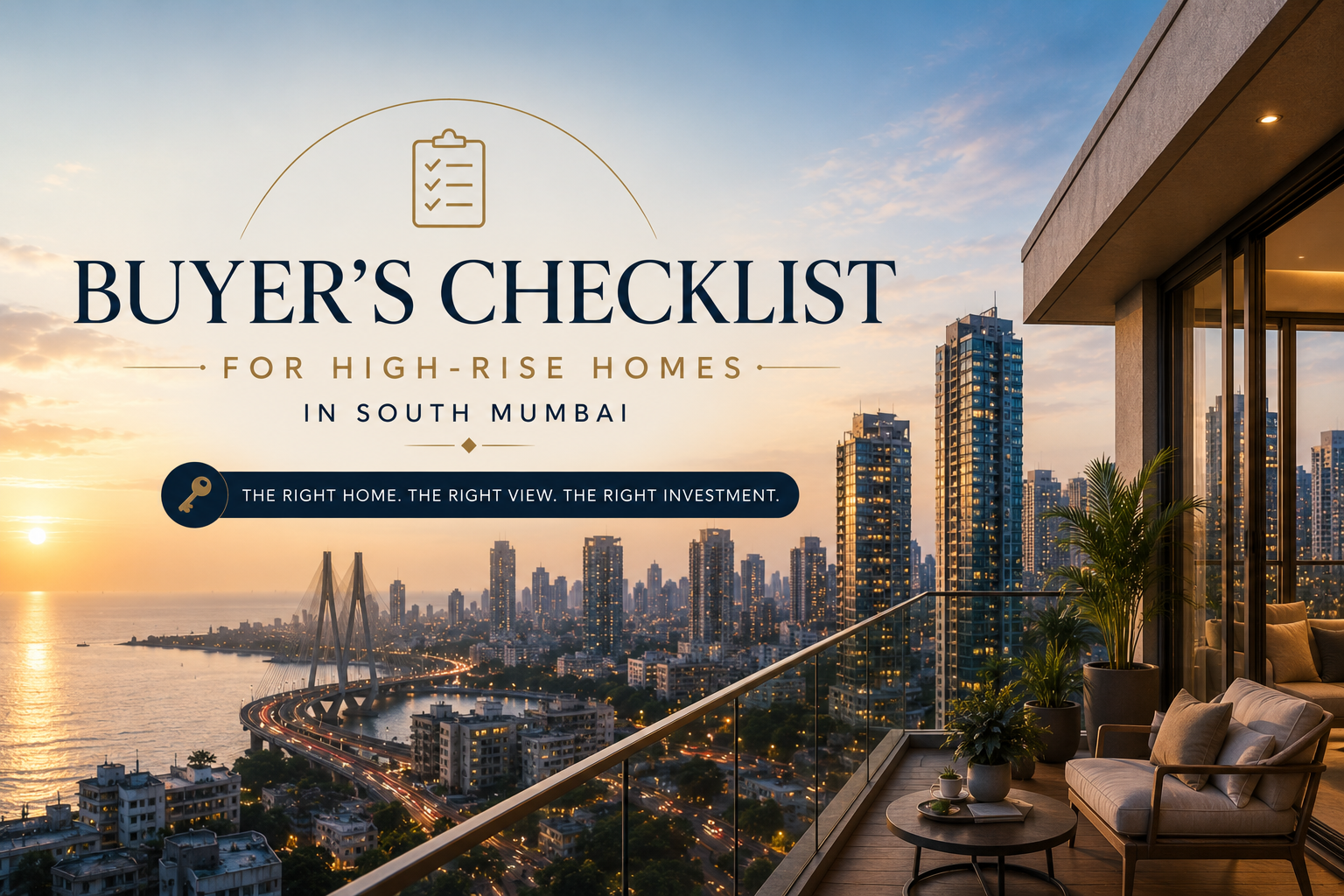
Buying a high-rise apartment in South Mumbai is not a transaction. It is a decision that involves legal due diligence, financial planning, builder evaluation, and a clear understanding of what you are committing to over the long term. The stakes are high, the numbers are large, and the variables are many.
For buyers evaluating properties across Worli, Mahalaxmi, Lower Parel, and Prabhadevi, this checklist is designed to bring structure to what can otherwise feel like an overwhelming process. Work through it methodically and you will enter any negotiation or registration with full clarity on what you are buying, what it will cost you to own, and what it is likely to be worth when it matters most.

1. Legal Checks: The Foundation of a Safe Purchase
No other item on this checklist matters if the legal foundation of the property is not sound. Legal due diligence on a high-rise South Mumbai property should cover the following without exception.
RERA Registration
Every project offered for sale in Maharashtra must be registered under RERA (Real Estate Regulatory Authority). Verify the project’s RERA registration number on the MahaRERA portal and confirm that the details listed there match what the developer is representing to you. Check the registered carpet area, the completion date, and the status of any complaints filed against the project or the developer. This takes thirty minutes and can save years of legal trouble.
Title Clearance
The land on which the building stands must have a clear, marketable title. Engage an independent property lawyer to examine the title documents, not the developer’s in-house legal team. Look for any encumbrances, litigation, or disputed ownership in the chain of title going back at least thirty years. In South Mumbai, where much of the land has complex ownership histories involving old tenancy laws and redevelopment agreements, this step is non-negotiable.
Occupation Certificate and Completion Certificate
For ready-to-move properties, verify that the builder has obtained the Occupation Certificate (OC) from the relevant municipal authority. Without an OC, the building is technically not approved for habitation, which affects your ability to obtain a home loan, register the property, and resell it in the future. The Completion Certificate confirms that the building has been constructed as per approved plans.
Approved Plans and FSI Compliance
Request copies of the sanctioned building plans and verify that what has been constructed matches what was approved. Deviations from sanctioned plans are not uncommon and can create legal complications at the time of resale or redevelopment. Confirm that the Floor Space Index (FSI) consumed by the project is within permissible limits under current municipal regulations.
Encumbrance Certificate
Obtain an Encumbrance Certificate from the Sub-Registrar’s office to confirm that the property is free of any registered mortgages, liens, or legal claims. This is a relatively simple document to obtain and provides a clean audit trail of all registered transactions on the property.
2. Floor-Rise Pricing: Understanding What You Pay Per Floor
High-rise buildings in South Mumbai are priced on a floor-rise basis, meaning the price per square foot increases with each floor above a base level. Understanding how this works allows you to evaluate whether the premium you are paying for a higher floor is justified by what that floor actually delivers.
How Floor-Rise Premiums Are Structured
Developers typically apply a floor-rise charge of between Rs. 50 and Rs. 200 per square foot per floor, depending on the project, the building height, and the developer’s pricing strategy. In premium projects in Worli and Prabhadevi, this number can be higher. Over the course of a 40 or 50-floor building, the cumulative premium between a low floor and a top floor can amount to a significant portion of the total purchase price.
What the Premium Actually Buys You
A higher floor in South Mumbai delivers better views, reduced street noise, improved natural light and ventilation, greater privacy from adjacent buildings, and in sea-facing towers, a more unobstructed sightline to the water. These are genuine lifestyle benefits and in most cases they also translate to stronger resale values and faster liquidity at the point of sale.
The question to ask is not whether a higher floor is better. It almost always is. The question is whether the specific floor-rise premium being charged by this developer for this building is proportionate to the improvement in view quality and livability that the additional floors actually deliver. Request floor-wise pricing schedules and map them against floor plans and view simulations before deciding.
Sweet Spot Floors in South Mumbai High-Rises
In South Mumbai’s high-rise towers, the floors that tend to offer the best balance of price and lifestyle benefit are typically in the upper-middle range of the building. The very top floors carry the maximum floor-rise premium and sometimes come with structural constraints like mechanical floor proximity or limited floor plate options. The lower floors carry less premium but may compromise on view and light. The upper-middle floors, typically from the 25th to the 40th in a 50-floor tower, often represent the most rational combination of price, view quality, and floor plan availability.
3. Builder Reputation: The Variable That Changes Everything
In South Mumbai’s luxury market, the builder’s reputation is not a soft consideration. It is a hard financial variable that affects delivery timelines, construction quality, post-possession service, maintenance standards, and resale value.
Track Record of Delivery
Research the developer’s history of project delivery across previous projects. Have they delivered on time or close to schedule? Have there been significant delays with explanations that were transparent and communicated proactively? Buyers can check MahaRERA for declared completion dates versus actual delivery dates on past projects. This information is public and revealing.
Construction Quality and Material Specifications
Visit a completed project by the same developer before committing to an under-construction one. Walk through the common areas, inspect the finishes, speak to existing residents if possible, and assess whether what was promised at the time of launch was actually delivered at possession. Look specifically at facade quality, lobby finishes, lift quality, and the overall sense of maintenance in a building that has been occupied for a few years.
Litigation History
Search for any consumer court cases, RERA complaints, or civil litigation involving the developer. A small number of disputes relative to the scale of the developer’s portfolio is not unusual. A pattern of complaints around the same issues, delayed possession, promised amenities not delivered, or deviation from sanctioned plans, is a warning sign worth taking seriously.
After-Sales Service and Society Formation
One of the most telling indicators of a developer’s integrity is how they handle the transition from builder to resident society. Developers who hand over the building promptly, assist in forming the cooperative housing society, transfer the maintenance corpus and sinking fund properly, and remain responsive to post-possession issues are the ones worth trusting with a large purchase. Ask existing residents in completed projects about their experience of this transition.
4. Maintenance Cost Breakdown: The Ongoing Commitment
The sticker price of a luxury high-rise in South Mumbai is the beginning of the financial commitment, not the end of it. Maintenance costs in premium buildings are significant and should be factored into your total cost of ownership calculation from day one.
Monthly Maintenance Charges
Premium high-rise buildings in South Mumbai typically charge monthly maintenance between Rs. 8 and Rs. 25 per square foot, depending on the building, the amenities offered, and the quality of the management. On a 2,500 square foot apartment, this translates to between Rs. 20,000 and Rs. 62,500 per month. Over a year, that is a material number that belongs in your financial planning.
Maintenance charges cover the operation of common amenities (gym, pool, concierge, landscaping), security, lift maintenance, building facade upkeep, generator backup, and administrative overheads. In buildings with higher amenity loads, such as multiple pools, a spa, a clubhouse, and valet parking, the maintenance charges reflect that.
Sinking Fund
In addition to monthly maintenance, housing societies collect a sinking fund contribution, which is a reserve set aside for major capital expenditure such as facade repainting, structural repairs, lift replacement, and other large-scale maintenance items that arise over the building’s life. Verify the sinking fund corpus of any building you are buying into and assess whether it is adequately funded for the building’s age and condition.
Property Tax
Property tax in Mumbai is assessed by the Brihanmumbai Municipal Corporation (BMC) based on the capital value of the property. For high-value properties in premium South Mumbai locations, annual property tax can be a meaningful sum. Confirm the current assessed value and the annual tax liability before purchase and factor this into your cost of ownership.
Utility Infrastructure Charges
High-rise buildings in South Mumbai often have centralised systems for water supply, sewage treatment, and power backup that come with their own operational costs distributed among residents. Understand how these are charged, whether on a per-unit basis or proportionate to apartment size, and what the current rates are.
5. Evaluating the Specific Micro-Market
South Mumbai is not a homogeneous market. Worli, Mahalaxmi, Lower Parel, and Prabhadevi each have distinct characteristics that affect what you buy, what you pay, and what you can expect in terms of appreciation and rental demand.
Worli is the most established of the four as a luxury residential address. Sea-facing towers here command the highest prices in South Mumbai and attract a buyer profile that is consistently ultra-HNI and NRI-weighted. Resale liquidity is strong and the address itself carries significant social capital.
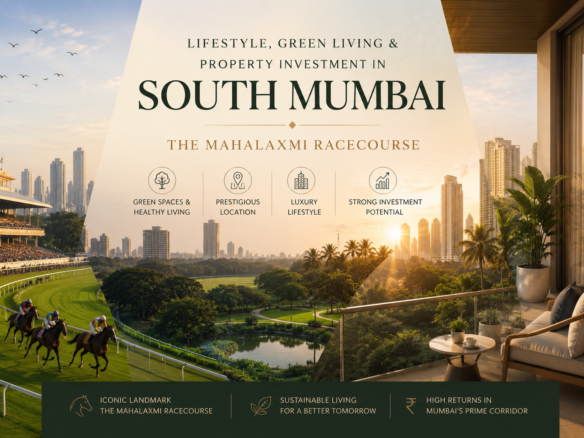
Mahalaxmi offers the racecourse-facing green cover advantage that no other South Mumbai micro-market can replicate. Supply is intentionally limited, which keeps price floors supported. Infrastructure improvements from the Coastal Road and metro expansion are adding a growth dimension to what was already a premium static market.
Lower Parel has transformed from a mill district into one of Mumbai’s most dynamic mixed-use destinations. The concentration of Grade A commercial space, retail, and hospitality in this corridor drives consistent rental demand for premium residential inventory. Penthouse and large-format inventory here attracts buyers who want South Mumbai proximity with a younger, more energetic neighbourhood character.
Prabhadevi combines the quiet prestige of South Mumbai with significant redevelopment momentum. Duplex and large-format apartments here attract buyers upgrading from older South Mumbai homes who want modern specifications without leaving the postal code they have lived in for decades.
6. Financial Structuring and Home Loan Considerations
For buyers using home loan financing, high-rise luxury properties in South Mumbai come with specific considerations worth understanding before approaching lenders.
Lenders assess the loan-to-value ratio based on the property’s registered value, not the total consideration paid. In luxury transactions where a portion of the consideration is paid outside of the registered value, the effective loan-to-value available to the buyer may be lower than anticipated. Ensure your financing plan accounts for this.
For NRI buyers, the documentation requirements for home loans from Indian banks are more extensive and the processing timelines are longer. Engage a bank that has a dedicated NRI lending desk and begin the loan process well before you need the funds.
Stamp duty in Maharashtra is 5% for male buyers and 4% for female buyers, with an additional 1% metro cess applicable in Mumbai. On a high-value transaction in South Mumbai, stamp duty alone is a significant outlay that should be budgeted for explicitly.

In Summary
Investing in high-rise South Mumbai real estate across Worli, Mahalaxmi, Lower Parel, or Prabhadevi is one of the most rewarding property decisions available to a buyer in India today. The locations are exceptional, the lifestyle is irreplaceable, and the long-term value fundamentals are sound.
But the quality of that decision depends entirely on the quality of the process that precedes it. Legal clarity, an honest assessment of floor-rise premiums, rigorous builder evaluation, and a full understanding of the ongoing cost of ownership are what separate a confident purchase from a regretted one.
Work through this checklist methodically. Ask every question. Engage independent professionals for legal and structural assessments. And then commit with the clarity that comes from having done the work properly.


Join The Discussion